Ten Essentials: Sun Protection
Out beyond the treeline, exposure can wreck you fast. So can a life without rest. In this week’s 10 Essentials, we explore Sabbath as God’s sun protection for a burned-out world.

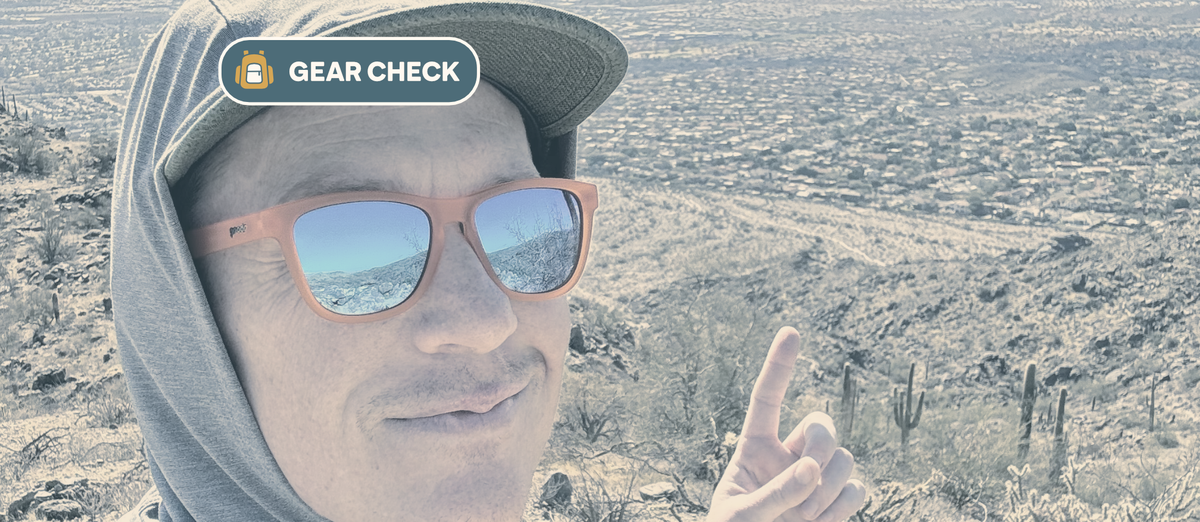
One minute you’re on a cool, shady stroll, and the next you’ve left the protection of the canopy into a landscape of rock, wind, and relentless light. There’s nowhere to hide — no trees, no cover, just exposure.
Out there, the sun isn’t a cheerful companion, it’s a real threat. Without the triple layer of protection — sunscreen, SPF-rated clothing, and polarized sunglasses — you don’t just get a tan. You risk severe burns, heat exhaustion, or even vision impairment. In the desert or high country, exposure is the enemy, and shade isn’t something you stumble into. You have to carry it with you.
Lately, as I’ve been reflecting on creation, it’s struck me how much modern life feels like living permanently beyond the treeline. We exist in a world of constant exposure: the unfiltered glare of comparison, the pressure to curate an identity, the demand to always be visible, productive, and available. Between the UV rays of social media and the heat of self-invention, it’s no wonder so many of us feel burned out.
And as it turns out, Scripture names an essential piece of protection for this exact condition. It’s called Sabbath.
A Cathedral in Time
When most of us hear the word Sabbath, we think of a rule — a command or a restriction placed on human behavior. But the Hebrew word shabbat simply means to cease — to stop (Gen. 2:2-3).
On the very first page of Scripture, God creates for six days and then stops. Yet there’s a detail we often miss: unlike every other day in Genesis 1, the seventh day has no closing line. There’s no “evening and morning.” The story doesn’t end the day. Could it be that the Sabbath wasn’t just a pause in the workweek, but an environment — an ongoing reality where humanity was invited to rest (nuach) and rule alongside God in peace (Gen. 2:15; Ps. 132:13-14)?
Abraham Heschel famously called the Sabbath a “cathedral in time.” While Israel had sacred spaces like the temple, the Sabbath was a sacred rhythm. It was a recurring shelter built not of stone, but of trust — a refuge from the heat of endless labor.
Two Reasons We Need Protection
When God later gives the Sabbath command in the Ten Commandments, he anchors it in two distinct realities — two different reasons we need this protection.
In Exodus 20, Sabbath is rooted in creation. Israel is told to rest because God rested after making the heavens and the earth (Ex. 20:8-11). By stopping, we imitate the Potter and acknowledge that we are creatures, not the Creator. The world doesn’t depend on our constant activity to keep turning (Ps. 127:1-2).
In Deuteronomy 5, the command is grounded in liberation. Israel is told to rest so that their servants can rest as well, remembering that they were once slaves in Egypt (Deut. 5:12-15). Pharaoh didn’t care about limits or frames — only output. Sabbath becomes a weekly declaration of freedom, a reminder that God’s people are no longer defined by their productivity.
Together, these reasons tell us something essential: rest isn’t laziness. It’s allegiance.
Sabbath as a Test of Trust
Before the Law was even given at Sinai, God used Sabbath to train Israel’s trust in the wilderness. Each day, manna fell from heaven. But on the sixth day, God instructed the people to gather twice as much, because none would fall on the seventh (Ex. 16:22-30). They had to stop. They had to trust.
And many couldn’t.
Sabbath exposed what they really believed. Would God still provide if they rested, or did survival ultimately depend on their effort? That question hasn’t gone away. When we refuse to stop, we’re often saying — without realizing it — that we don’t trust God to keep the world running while we rest. Sabbath is a weekly surrender of control and combats ideas that everything depends on us (Deut. 8:3).
Jesus: The Ultimate Shade
The New Testament tells us that the Sabbath was always pointing forward. Paul calls it a “shadow” — not meaningless, but incomplete — because the substance belongs to Christ (Col. 2:16-17).
When Jesus healed on the Sabbath, the religious leaders accused him of breaking the law (Mark 3:1-6). But Jesus wasn’t violating the day — he was revealing its purpose. “The Sabbath was made for man, not man for the Sabbath” (Mark 2:27). It was always meant for restoration.
That’s why Jesus invites the weary to come to him. His yoke is easy, and his burden is light. In him, we find what the day itself was always meant to provide (Matt. 11:28-30). He is the Lord of the Sabbath (Matt. 12:8) — and the shade the Sabbath promised.
Field Notes for the Week
For the hiker, sun protection isn’t optional — it’s how you survive. For the Christian, the practice of stopping is just as essential. While we’re no longer bound to the Old Covenant Sabbath laws (Rom. 14:5; Col. 2:16), the wisdom remains. If you’re feeling exposed — burned by the pressure to produce, curate, or invent yourself — it may be time to step into the shade.
Stop by setting down your work for a dedicated time. Remember that you aren’t a slave to your output. Trust that the world won’t fall apart if you rest (Heb. 4:9-11).
The Lord is your keeper. The Lord is your shade at your right hand (Ps. 121:5). You don’t have to live beyond the treeline.